Fresh produce departments are among the most challenging sections of any supermarket when it comes to energy management and shrink control. They require consistent refrigeration to slow down natural respiration and delay spoilage, yet they are frequently exposed to disruptive factors such as warm ambient air, fluctuating humidity, and lighting heat.
One often overlooked cause of unnecessary waste in produce displays is the constant infiltration of warm air during non-operating hours. Overnight, when stores are closed, refrigerated cases remain exposed to the open sales floor, forcing compressors to run longer to maintain target temperatures. This continuous energy draw not only increases utility bills but also accelerates deterioration of displayed produce, leading to higher trim rates.
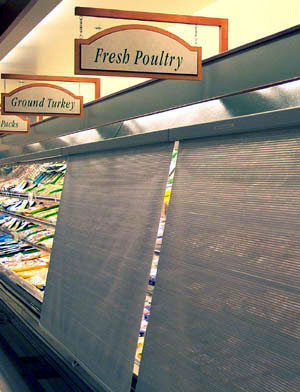
Econofrost night covers provide a passive, cost-effective solution to this problem. By acting as a thermal barrier, these covers protect the cold air inside display cases, extend freshness in sensitive produce items, and support measurable reductions in daily waste.
The Challenge of Produce Shrink
Supermarkets accept that some produce trim is unavoidable. Leafy greens wilt, berries soften, and root vegetables lose turgidity over time. However, many of these losses occur prematurely—not because of inherent product limitations, but because of the stress placed on produce by refrigeration systems forced to overcompensate.
Key contributors to excess trim include:
- Overnight temperature cycling caused by warm air entering open cases.
- Condensation that encourages microbial growth and surface spoilage.
- Dehydration of greens and herbs exposed to dry, cold airflows.
- Nutrient degradation accelerated by lighting systems that remain on for long periods.
These factors combine to create a silent drain on profit margins. Even a small percentage reduction in trim can translate into significant annual savings across multiple stores.
How Econofrost Night Covers Work
Econofrost night covers are woven aluminum fabric curtains designed to be pulled down over refrigerated display cases when stores close. Unlike improvised barriers, these covers are engineered to:
- Minimize radiant heat transfer from store lighting and ambient air.
- Limit infiltration of warmer, moist air that disrupts stable case conditions.
- Support faster recovery times when cases are reopened the following day.
- By creating a more consistent environment, produce remains closer to its harvest quality, reducing the amount that needs trimming before sale.
Case Study: Trim Reduction in Produce Departments
A supermarket group implementing Econofrost night covers across several high-volume stores sought to measure the impact on produce shrink and energy savings. Rather than relying solely on energy metrics, the study placed equal emphasis on waste reduction.
Findings included:
- Noticeable improvements in leafy greens: Items such as romaine, spinach, and kale retained crispness longer, requiring less trimming before display.
- Better color retention in peppers and tomatoes: Produce maintained a vibrant appearance, encouraging faster customer turnover.
- Reduced dehydration in herbs and unpackaged vegetables: Basil and parsley showed fewer signs of overnight wilting.
- Lower rewrap and cull rates: Fewer items needed to be removed each morning due to quality deterioration.
Although exact percentages varied by store, managers consistently reported that trimming labor decreased and sellable yield improved.
Why Produce Trim Reduction Matters
The financial impact of reduced trim goes beyond the savings on discarded product.
- Labor Efficiency – Staff spend less time removing unsellable produce, freeing them for customer service and merchandising tasks.
- Customer Experience – Better-looking displays in the morning hours build shopper confidence in freshness.
- Sustainability – Reduced waste aligns with corporate sustainability initiatives and food waste reduction goals.
- Operational Savings – Less discarded produce lowers disposal costs and overall shrink reports.
Complementary Benefits: Energy and Freshness
While the focus of this case study was on produce trim, stores also reported energy benefits:
- Refrigerated cases required less compressor run time overnight.
- Temperatures stabilized more quickly after covers were removed in the morning.
- Lighting systems contributed less heat load to produce sections.
Together, these effects strengthened the financial justification for night cover installation.
Best Practices for Implementation
Retailers considering Econofrost night covers for produce cases should follow best practices to maximize effectiveness:
Staff Training – Ensure that night covers are deployed consistently during closed hours and retracted before store opening.
Regular Maintenance – Inspect covers for wear and proper rolling to guarantee continued performance.
Case Selection – Prioritize high-volume produce cases where shrink levels are historically higher.
Integration with Lighting Controls – Combine covers with automated dimming or shut-off systems to further reduce thermal load.
Industry Perspective
Store operators increasingly view night covers not simply as energy-saving accessories but as merchandising tools that protect the quality of high-value categories. In produce sections, where visual appeal drives purchasing decisions, even marginal improvements in freshness can create meaningful advantages over competitors.
Retailers adopting Econofrost report:
- Stronger confidence in product presentation.
- Improved sell-through of delicate items.
- Positive customer feedback on perceived freshness.
These outcomes underline the dual role of night covers in both operational efficiency and sales strategy.
Final Thoughts
Produce trim has long been accepted as an unavoidable cost of doing business. However, this case study demonstrates that shrink can be significantly reduced by addressing environmental conditions at the case level. Econofrost night covers provide a practical, proven method to stabilize temperatures, preserve product integrity, and reduce daily waste.
By lowering the rate of premature spoilage, supermarkets benefit from:
- Higher sellable yield.
- Reduced labor devoted to trimming.
- Less food waste entering the disposal stream.
- Stronger financial performance and sustainability outcomes.
For retailers seeking measurable improvements in both energy efficiency and fresh food quality, Econofrost represents a strategic investment with long-lasting benefits.
Take the next step in protecting your produce and reducing shrink.
Discover more about Econofrost Night Covers