Supermarket lighting has long been optimized for brightness and energy efficiency. Yet research has consistently shown that not all light is beneficial when it comes to food preservation.
Promolux’s Safe Spectrum® LED lighting was developed to address this exact issue. By filtering out the most harmful spectral bands while maintaining natural color presentation, Safe Spectrum® creates a balance between effective merchandising and food protection
Understanding the Problem: Light-Induced Food Degradation
Research in food science has identified several risks associated with continuous exposure to broad-spectrum retail lighting:
- Pigment Oxidation: Myoglobin in meats, chlorophyll in leafy greens, and anthocyanins in berries are all light-sensitive pigments. Under standard lighting, these compounds degrade, leading to discoloration.
- Lipid Oxidation: Fatty acids in fish, poultry, and dairy absorb light energy, triggering rancid off-flavors.
- Vitamin Breakdown: Riboflavin (Vitamin B2) and other light-sensitive nutrients degrade rapidly under visible light, especially between 500–630 nm.
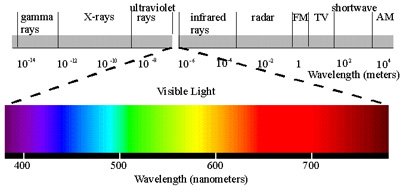
The visible green-to-red portion of the spectrum (500–630 nm) has been identified as particularly damaging because it interacts strongly with food pigments and photosensitive compounds.
Why the 500–630 nm Range Matters
The 500–630 nm range falls within what human eyes perceive as green, yellow, and orange-red light. While these wavelengths help make displays appear bright and colorful, they also:
- Trigger Oxidation Reactions: They provide energy that accelerates the conversion of pigments (e.g., oxymyoglobin in red meat) into their oxidized, brown forms.
- Degrade Nutrients: Riboflavin in milk and dairy is especially vulnerable in this range, leading to nutrient loss and flavor defects.
- Shorten Shelf Life: Produce and protein products exposed to these wavelengths show faster deterioration, forcing retailers to discount or discard items earlier.
In essence, the very light designed to “sell” food can also undermine its quality.
Safe Spectrum® Technology: Targeted Wavelength Control
Promolux Safe Spectrum® LEDs are engineered to minimize emission in the 500–630 nm range while still producing light that looks natural to shoppers. Unlike standard LEDs, which emit broadly across the visible spectrum, Safe Spectrum® uses spectral balancing technology that selectively suppresses harmful bands.
Key Outcomes:
Lower Pigment Oxidation: Meats retain natural red tones longer.
- Improved Nutrient Stability: Milk, cheese, and yogurt preserve riboflavin and Vitamin A levels for extended periods.
- Better Flavor Retention: Slowed lipid oxidation reduces off-flavors in fish, poultry, and deli products.
- Natural Appearance: Products remain attractive without oversaturation or unnatural tones.
Scientific Support for Spectrum Control
Research from both independent universities and internal Promolux trials demonstrates the importance of controlling specific light bands.
The University of Zaragoza (Spain): Experiments showed that spectrum-optimized LEDs slowed both pigment and lipid oxidation compared to standard retail lighting, with meats maintaining natural color for more than 24 hours longer.
Texas A&M Department of Animal Science (USA): Studies on meats and dairy demonstrated that targeted LED spectrum control reduced oxidative spoilage, improved aroma retention, and extended display life.
Promolux Technical Reports: Internal testing across meats, dairy, produce, and seafood confirmed that suppressing harmful wavelengths leads to measurable reductions in shrink, spoilage, and nutrient degradation.
Together, these findings validate the scientific foundation of Safe Spectrum® technology—that visible bands within 500–630 nm must be carefully managed in retail lighting.
Applications Across Food Categories
- Meat & Poultry
- Safe Spectrum® minimizes browning caused by myoglobin oxidation.
- Chicken and turkey retain pink tones longer.
- Reduced need for early markdowns or rewraps.
- Dairy & Milk
- Protects riboflavin from rapid degradation.
- Maintains flavor stability, reducing “sunlight flavor” in milk.
- Extends shelf appeal of cheeses and yogurts.
- Seafood
- Preserves red pigments in tuna and salmon.
- Slows rancidity in omega-3-rich fillets.
- Improves consumer perception at the seafood counter.
- Produce & Fresh Greens
- Protects chlorophyll in leafy vegetables from fading.
- Maintains anthocyanin pigments in berries.
- Reduces premature wilting and discoloration.
Retailer Benefits Beyond Food Quality
While the scientific foundation is about food preservation, the practical benefits for retailers are equally compelling:
- Reduced Shrink: Less spoilage means fewer discarded items.
- Increased Sales: Shoppers are more likely to buy fresh-looking products.
- Energy Efficiency: Safe Spectrum® LEDs provide the same efficiency as standard LEDs, with added protective value.
Best Practices for Implementation
- Use Safe Spectrum® LEDs consistently across departments.
- Pair with night covers (e.g., Econofrost) to further minimize after-hours light and thermal exposure.
- Monitor shrink and markdown rates before and after installation to measure ROI.
Final Thoughts
Retail display lighting is no longer just about brightness. The science of light spectrum management has proven that certain visible bands—particularly 500–630 nm—pose significant risks to food quality and shelf life.
By eliminating or reducing these damaging wavelengths, Promolux Safe Spectrum® LEDs deliver a unique combination of product protection, natural merchandising, and operational efficiency.
For retailers seeking to reduce waste, improve food quality, and strengthen shopper trust, spectrum-optimized lighting is not just an upgrade—it is a necessity.
Discover how Promolux Safe Spectrum® LEDs can transform your food displays.
Learn more at www.promolux.com