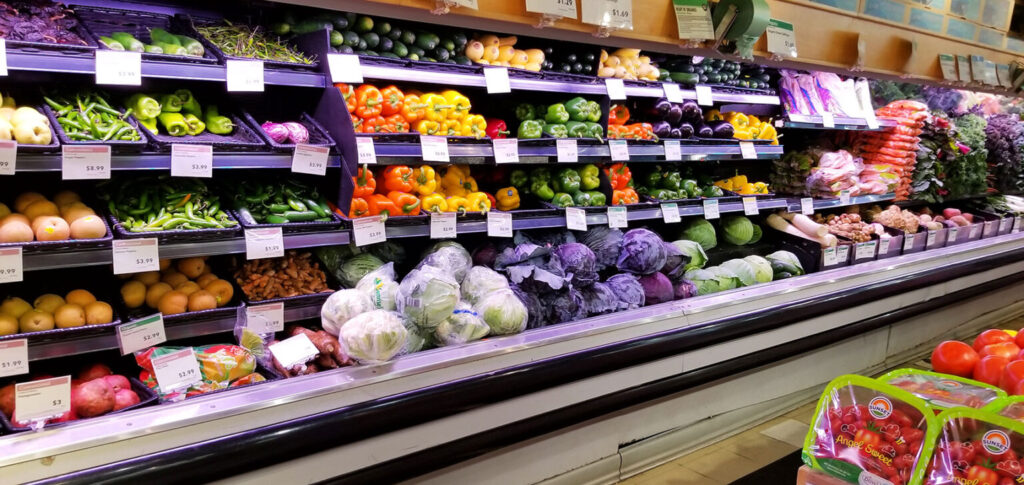
Why Surface Temperature Matters in Food Safety
Refrigerated cases are designed to keep foods at specific temperatures—usually between 0°C and 4°C for fresh meat, seafood, and dairy. However, lighting introduces a localized thermal load that can raise the temperature of product surfaces:
Microbial thresholds: Pathogens like Salmonella, Listeria monocytogenes, and E. coli grow more rapidly as surface temperatures rise above 4°C.
Shelf-life loss: Higher surface warmth accelerates spoilage bacteria, reducing safe display hours.
Visual cues: Color fading and drip loss caused by temperature fluctuations make foods look less appealing and trustworthy.
Even a 1–2°C increase in surface temperature can be enough to change microbial dynamics and reduce product safety margins.
The Hidden Risks of Standard Lighting
Standard retail lighting—whether fluorescent or conventional high-intensity LEDs—was never designed with food preservation in mind. Problems include:
- Localized hotspots: Concentrated beams generate uneven heating.
Areas directly beneath lights are warmer than surrounding product. - High drive currents: Conventional LEDs often run at higher currents, producing unnecessary radiant heat.
- Spectral imbalance: Blue and violet wavelengths not only accelerate oxidation but also contribute to surface heating.
Together, these factors compromise both visual freshness and food safety, forcing retailers into costly markdowns or waste.
Promolux’s Approach: Lower Heat, Safer Food
Promolux SafeSpectrum™ LEDs are engineered to address these challenges by integrating low-heat, spectrum-balanced technology:
Low current operation (<50 mA): Reduced current means lower diode temperatures, preventing excess radiant heat.
Multi-coating thermal management: Promolux COB (chip-on-board) LEDs use specialized coatings to disperse heat evenly, eliminating hotspots.
Filtered wavelengths: By reducing harmful 500–630 nm bands, Promolux prevents both photo-oxidation and unnecessary thermal stress.
The result is cooler food surfaces, slower microbial activity, and safer retail displays.
Food Categories That Benefit
- Meat & Poultry: Lower temperatures reduce conditions that allow Salmonella and Listeria to thrive.
Color remains vibrant, avoiding the dull greying caused by both oxidation and bacterial activity. - Seafood: Fatty fish such as salmon and mackerel spoil rapidly when warmed.
- Dairy & Cheese: Fluid milk retains nutrients without rapid bacterial expansion at the surface.
- Produce: Cooler illumination slows soft rot and surface decay in leafy greens and berries.
Food Categories That Benefit
Meat & Poultry: Lower temperatures reduce conditions that allow Salmonella and Listeria to thrive.
Color remains vibrant, avoiding the dull greying caused by both oxidation and bacterial activity.- Seafood: Fatty fish such as salmon and mackerel spoil rapidly when warmed.
- Dairy & Cheese: Fluid milk retains nutrients without rapid bacterial expansion at the surface.
- Produce: Cooler illumination slows soft rot and surface decay in leafy greens and berries.
Research Support
Several studies highlight the importance of thermal stability in refrigerated lighting:
- University of Zaragoza (Spain):Showed that spectrum-balanced lighting not only reduced oxidation but also helped maintain lower surface temperatures in meats and seafood compared to standard LEDs.
- Texas A&M University, Department of Animal Science (USA):Confirmed that meats exposed to optimized LED systems maintained quality longer, with slower microbial spoilage linked to reduced heat load.
- Promolux Technical Testing: Internal trials demonstrated that Promolux LEDs running at low current produced significantly cooler case conditions, delaying pathogen-friendly temperature rises by several hours.
Retailer Outcomes
For retailers, lower surface temperatures translate directly into safer food handling:
- Reduced microbial risk: Foods remain within recommended safety ranges longer.
- Fewer customer complaints: Fresh foods look and taste safer, building trust.
- Regulatory confidence: Compliance with HACCP and food safety standards is easier when cases operate within safe temperature limits.
- Operational efficiency: Less shrink, fewer markdowns, and improved consistency across perishable departments.
One U.S. grocery chain reported that after installing Promolux LEDs in deli and seafood cases, incidents of product removal due to suspected spoilage decreased by over 20%, directly tied to cooler surface conditions.
ESG & Sustainability Benefits
Beyond food safety, lower surface temperatures also contribute to sustainability goals:
Reduced food waste: Less spoilage means fewer products discarded prematurely.
Energy savings: Cooler cases reduce compressor cycling, lowering electricity use.
Longer fixture life: LEDs running cooler last longer, reducing replacement needs.
In an era of increasing scrutiny on ESG reporting, Promolux LEDs help align energy savings with food safety performance.
Implementation Considerations
Retailers looking to reduce pathogen risk through lighting should:
- Prioritize high-risk categories like meat, seafood, and deli products for Promolux retrofits.
- Combine lighting upgrades with night covers and proper airflow design for maximum protection.
- Monitor microbial indicators and shrink data pre- and post-installation to validate ROI.
Final Thoughts
In food retail, lighting is more than illumination—it is a direct factor in food safety. Conventional lighting systems introduce unnecessary heat that undermines cold chain integrity and accelerates pathogen growth.
Promolux SafeSpectrum™ LEDs provide a smarter solution. By running cooler, dispersing heat, and filtering harmful wavelengths, they create display environments that protect both the quality and safety of perishable products.
For retailers, this means fewer recalls, less waste, lower energy bills, and stronger shopper trust.
Promolux lighting isn’t just about looking fresh—it’s about staying safe and profitable.
Learn more about spectrum-optimized food safety lighting: www.safespectrum.com